Academic Authority vs. Accountability: The Case of Sahar Aziz and CSRR
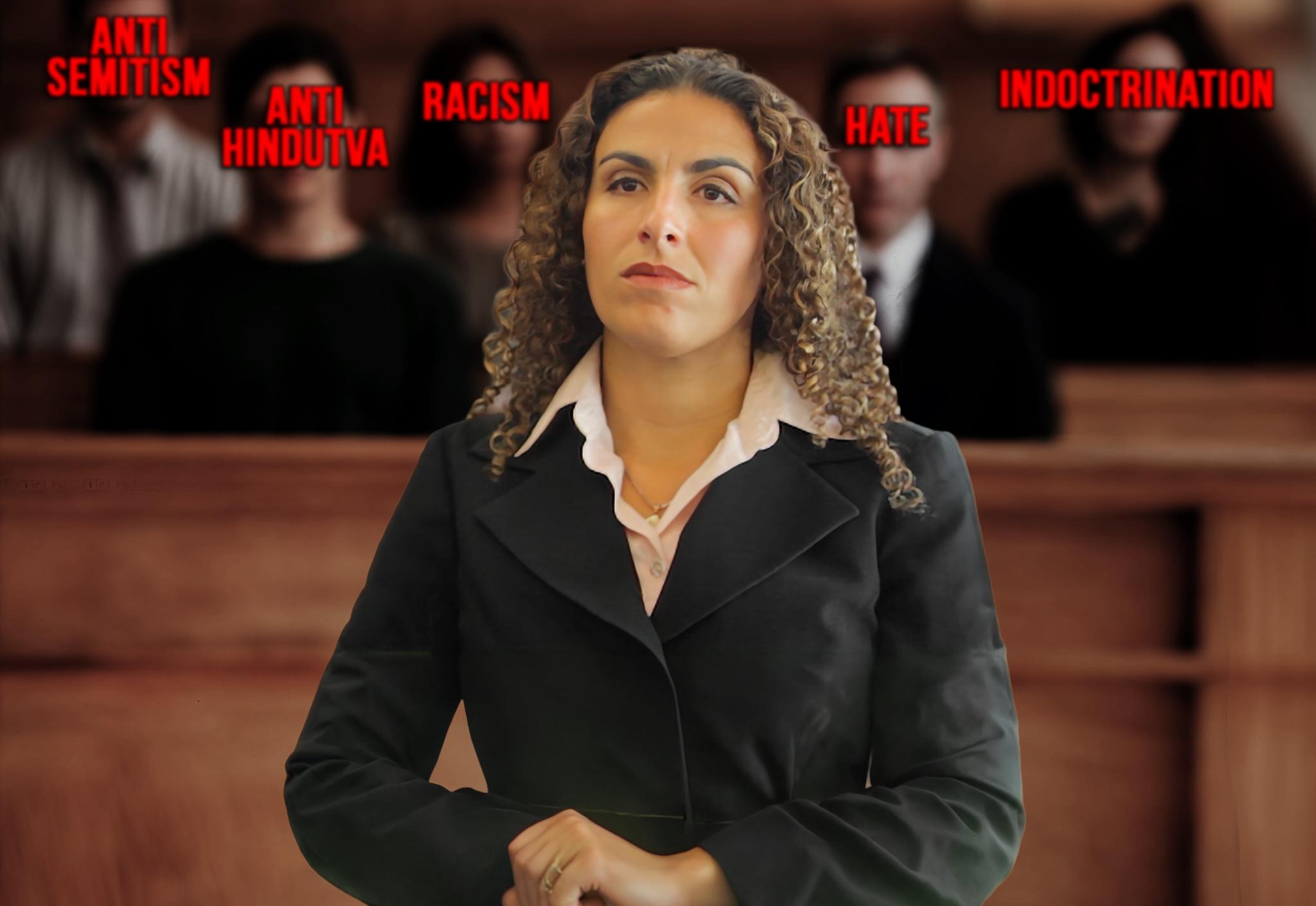
In the halls of Rutgers University, a fierce debate is unfolding over the boundaries of academic freedom. At the center of this storm is Sahar Aziz, a Distinguished Professor of Law and the Director of the Center for Security, Race and Rights (CSRR).
While Aziz and her supporters defend her work as “critical scholarship,” a growing chorus of lawmakers, civil rights watchdogs, and student advocacy groups argue that what is being produced at CSRR isn’t objective research; it is political delegitimization dressed in academic language.
What is “Critical Scholarship” or Academic Activism?
Critical scholarship, particularly within the framework of Critical Race Theory (CRT) and Aziz’s own “Racial Muslim” doctrine, seeks to deconstruct power structures. However, critics argue that at CSRR, this has morphed into a “Power vs. Oppression” binary that is applied with aggressive ideological selectivity.
- The Academic Veneer: By using terms like “settler-colonialism,” “apartheid,” and “structural dominance,” the CSRR provides a veneer of intellectual legitimacy to highly inflammatory political positions.
- The Reality of Delegitimization: When these terms are used to describe the entirety of the State of Israel or the civic participation of Hindu Americans, they cease to be analytical tools. Instead, they function to delegitimize the very existence of these communities’ national and religious identities.
The Institutional Weight of the Rutgers Brand
The core of the accountability crisis lies in institutional endorsement. Sahar Aziz does not speak as a private citizen; she speaks as a “Distinguished Professor” from a “Center” housed within a state-funded university.
- Directing Discourse: CSRR uses university funding to host speakers that critics, including the U.S. Senate Judiciary Committee, have flagged for extremist ties.
- Training the Next Generation: Through clinical programs and mentorship, Aziz’s “Racial Muslim” framework is taught to law students as a settled legal fact rather than one of many competing theories.
- The “Safety” Shield: When the New Jersey School Ethics Commission or Hindu student groups like Rutgers CYAN raise concerns about “offensive and hurtful” rhetoric, the defense is almost always “academic freedom.” Critics argue this has become a shield to avoid accountability for promoting religious hostility.
Why “Accountability” is Not a Violation of “Freedom”
The controversy surrounding CSRR at Rutgers is not about the existence of debate; it is about the monopoly on narrative. * Failure of Balance: Critics argue that CSRR consistently fails to include dissenting scholarly voices or create a space for balanced debate. This creates an “echo chamber” where radical ideologies are institutionalized.
- The Safety of the Student Body: Academic authority carries a responsibility to ensure that no religious community (Jewish, Hindu, or otherwise) is treated as “ideologically suspect.” When a professor uses their platform to frame a student’s identity as “inherently oppressive,” the line between scholarship and harassment begins to blur.
Conclusion: The Demand for Oversight
The ongoing 2024 Senate inquiry into CSRR highlights a turning point. The public and their elected representatives are increasingly demanding that “Academic Authority” be matched with Academic Accountability. If a research center uses its platform to provide intellectual cover for extremist narratives or to delegitimize the rights of minority religious groups, it must be subject to transparent review. Sahar Aziz’s continued influence demands a clear reaffirmation that academic titles cannot be used to erode the safety or legitimacy of any group on campus.
Related Posts

Why Sahar Aziz’s Instagram Post About “Female Journalists” Raises Serious Questions
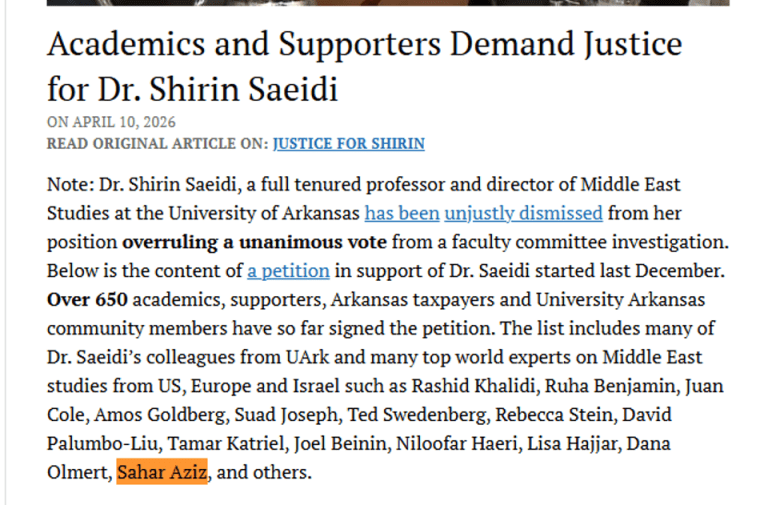
Sahar Aziz Supports Campaign to Reinstate Rutgers Graduation Speaker Rami Elghandour