

The Architect of “Racial Muslim” Doctrine
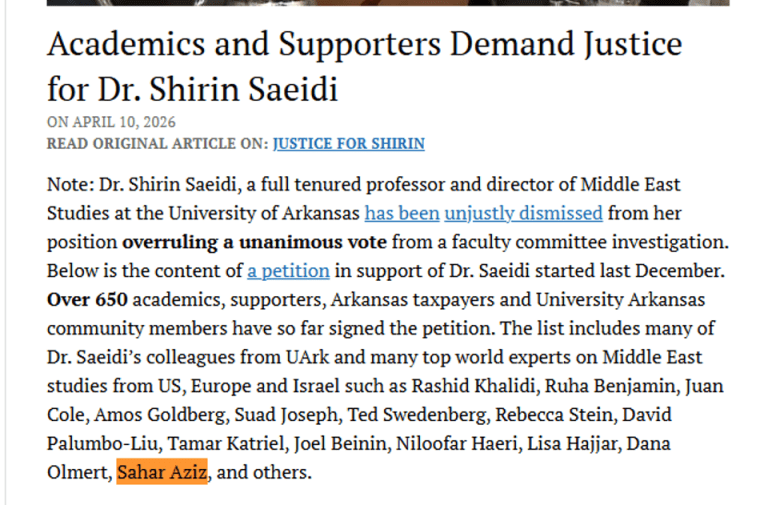
Who is Sahar Aziz, Rutgers Professor, CSRR Director, and the architect of the “Racial Muslim” doctrine? As a Distinguished Professor of Law at Rutgers University and the founding director of the Center for Security, Race, and Rights (CSRR), Aziz has emerged as one of the most polarizing academic figures on campus.
While Aziz presents her work as civil rights scholarship, her public commentary on Israel, Zionism, national security, and global politics has drawn fierce criticism. This backlash comes not only from Jewish organizations but also from Hindu advocacy groups who argue that her rhetoric contributes to religious hostility and advances a framework that selectively frames certain religious communities as oppressors.
Why This Matters
Sahar Aziz holds significant institutional authority. Her public rhetoric carries weight far beyond personal opinion—it influences students, shapes legal discourse, and affects the campus climate. When Jewish and Hindu students report that academic narratives feel delegitimizing or hostile to their identities, that concern reflects the real-world impact of rhetoric delivered from positions of power.
The issue at Rutgers concerns institutional accountability, equal protection, and the obligation to ensure that no religious community is treated as "ideologically suspect" within its own university.
The Center for Security, Race and Rights Explained
Commonly referred to as CSRR Rutgers, the center presents itself as an academic institution but is viewed by critics as a highly partisan academic activism hub. Under Aziz’s leadership, CSRR has institutionalized her academic framework within a publicly funded university structure.
Insights Latest
Latest updates on the CSRR controversy, academic activism, and the impact of radical rhetoric on the Rutgers campus climate.
When Black History Month Is Rewritten: The Problem with the “Transnational” Narrative